
Taken from my Substack, originally published on July 9, 2026:
Before I was a poet, I was an artist. I’ve always been an artist; there’s never been any doubt about this from anyone around me. My family knew this growing up, my teachers affirmed it, and awards recognized it. The only person who ever wavered on this identity was me, partly because I chose to pursue a professional career outside of it after high school; and because, let’s be honest, I had internalized the sexist idea that I couldn’t be successful as an artist simply because I was a woman.
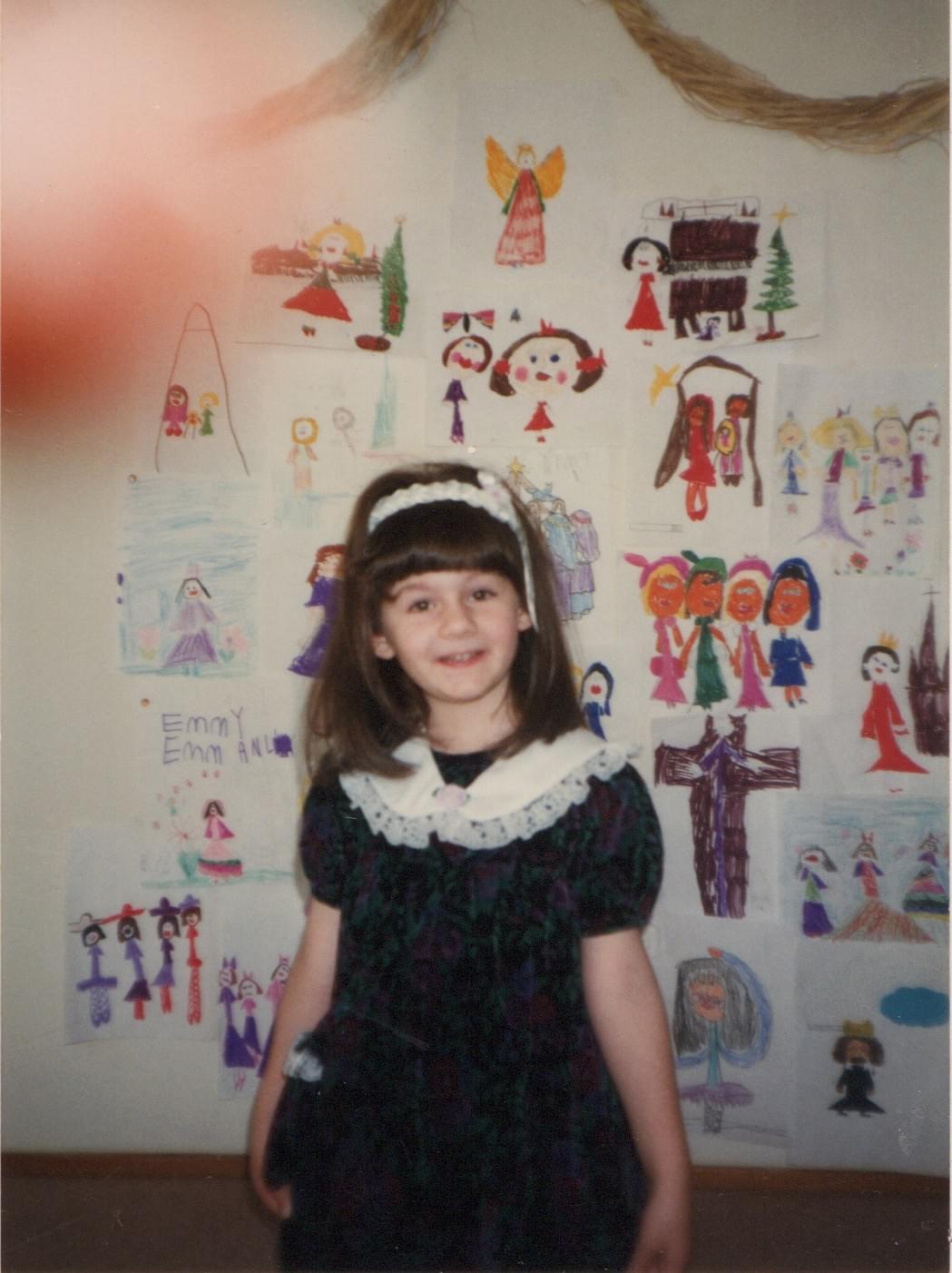
One of my favorite images of me as a child. I still paint and write about the same themes, like religion and family.
I’ve worn many different identities in my life. I’ve been a student, a teacher, a Christian, a conservative, a liberal, a feminist, a linguist, an artist, an illustrator, a painter, a writer, a novelist, a poet, an expat, an immigrant, a sister, a daughter, a friend. Some of these identities I’ve shed off in recent years, like taking off an old, worn coat. Others are newer, ones which I’m still wearing.
Being an artist, however, saved me from the pain of losing my other identities. It saved me from losing myself. It saved me from killing myself.
When my oldest sister was diagnosed with stage 3 cancer in 2015, it completely changed my life. I was already on the cusp of change—getting ready to graduate with my bachelor’s, starting grad school, starting my teaching career. Life is already wild and new for a 24-year-old grad fresh out of university starting her life. Now plug in a cancer diagnosis amid the glittering graduation sashes and metallic cap tassels. I was upended.
When Dora did pass away, nine months after her initial diagnosis, it brought up a lot of stuff that I hadn’t felt since my father’s death at seven years old. As an adolescent, Christianity had helped me grieve my father’s death. But now in my mid-twenties, I had already been questioning the political prerequisites of the faith. Christianity was no longer helping me grieve. In fact, the strict world view of evangelical Christianity was mentally harming me.
I had believed that if I followed all the rules of Christianity—which involved a lot of abstinence from very normal college things like sex, drugs, rock n’ roll—God would give me the things that I wanted. And what I wanted, more than anything, was to save Dora’s life.
I prayed for God to heal my sister daily, if not, every hour. When God didn’t heal her, when she passed away in front of me, I prayed for God to raise her from the dead. Muttered it under my wet breath that fused with the steam of my tears. I was told my whole life God raised people from the dead—God had raised his son from the dead after all, what’s another body? I had read all the stories, and at the time, my faith was surely larger than a mustard seed, as Jesus had claimed I needed to have. And I wasn’t the only delusional one—my family believed it too. My whole church espoused it. But nothing happened. I couldn’t show any of my doubts on the outside, however. I still had to present this perfect, composed image at church. I couldn’t show that I viewed God’s “favor” as unfair. Why did God take my sister but leave other people’s families intact? After my dad had died too? I had previously believed God was just, but now I didn’t.
I didn’t know what to do. My worldview as an evangelical Christian was crumbling (oh and don’t even get me started on American politics. The Trumpism of church is a whole other Substack topic). Questioning God’s existence, and the existence of everything I had ever believed, caused me to become suicidal. I couldn’t live in a world that didn’t abide by the rules that I had previously believed in.
It was in these moments, when I turned to art. I started writing in my notebook profusely. I hadn’t written about my feelings since I was a teen. In that notebook, I wrote a poetry book. Later, I wrote a novel. I had never considered myself a writer before, and I didn’t even care if I was good or not, I simply could not stop writing. My therapist told me that writing was therapy, and it truly was.
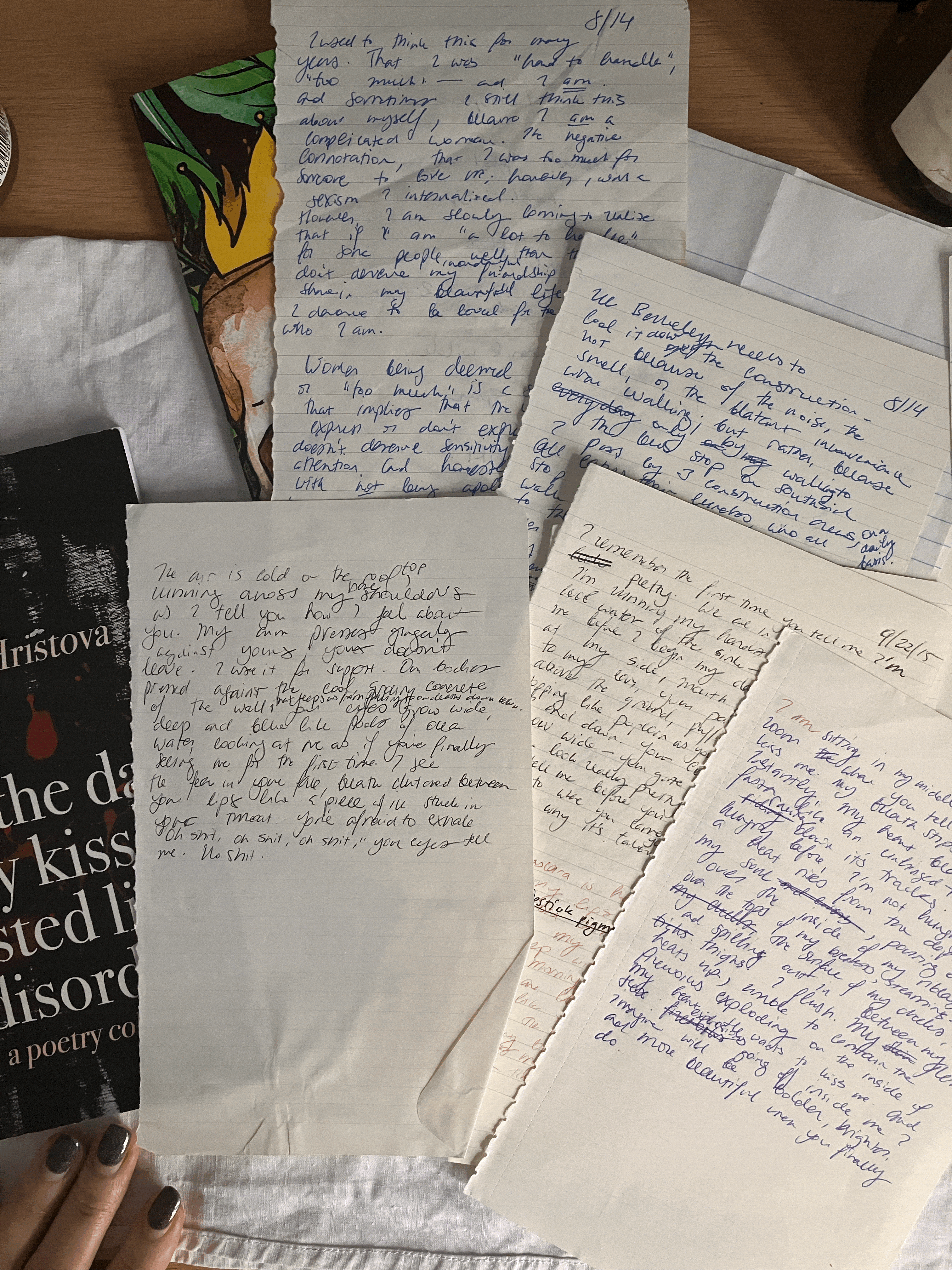
Some of my old Moleskin notebooks where I first started writing poetry. I didn’t realize I was writing poetry at first; I was just documenting my feelings. But later, I’d flip through my notebooks and realize I had written whole books. I later typed and edited them. I also designed the covers and illustrations. Some fellow writers helped me edit for chronology and storyline, but the rest of the self-publishing process was left up to me.
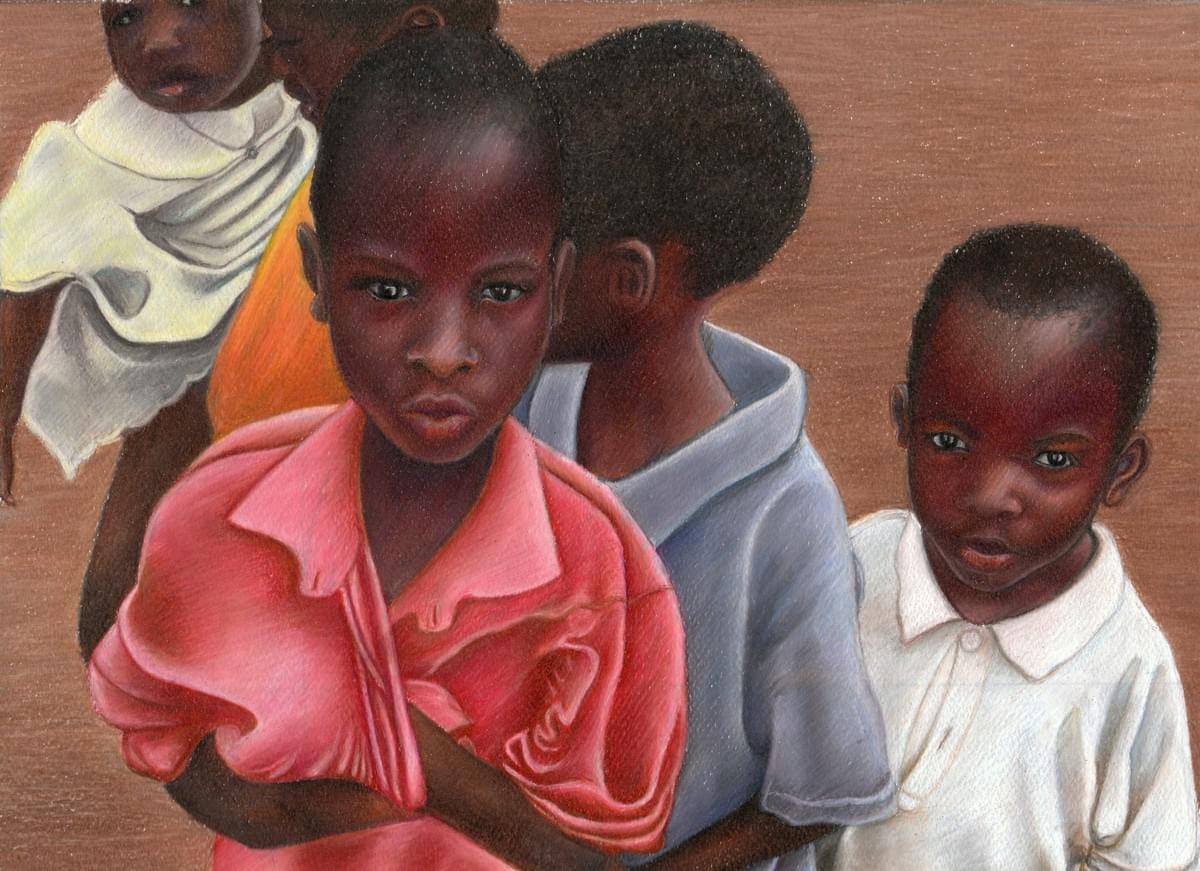
It was at that time that I started experimenting with my artistic style as well. Previously, I had been a childhood realist. I had won a Congressional award for my drawing, Boy is Red, in 2009. I was known for my very lifelike and illustrative drawings, mainly using dry media.
But everything in my life was changing. I started to prime black canvases. I flicked red paint on them without a sketch or a plan. The resulting images showcased how I felt, rather than what I saw. Messy. Unkempt. Undefinable. Dark. I was learning nuances, and challenging everything that I had ever believed about God, faith, and eventually, romantic love.
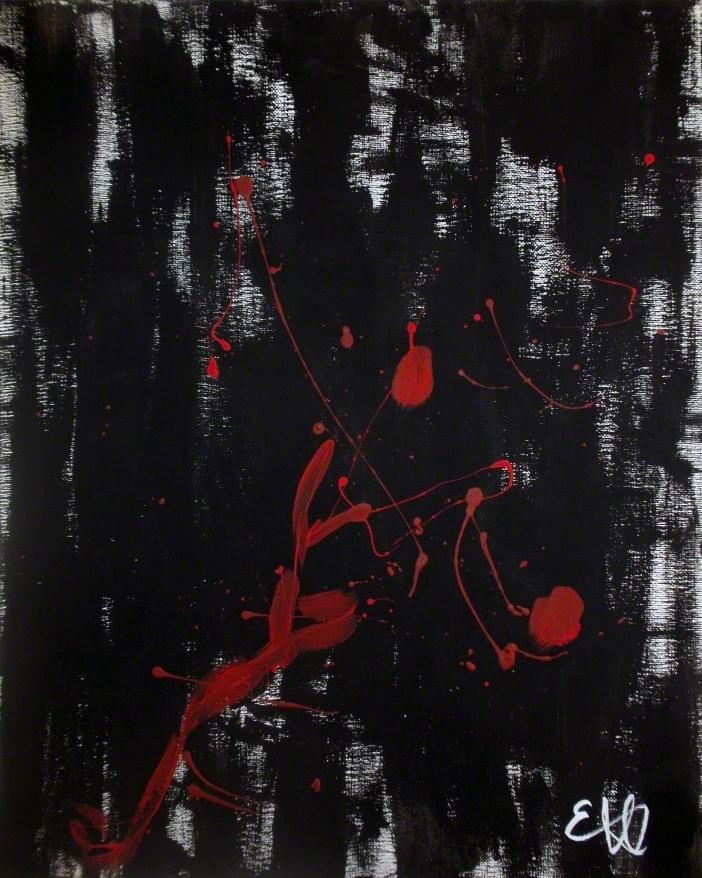
was my first abstract piece ever. Eventually, it became the cover of my first poetry book, The Day My Kisses Tasted Like Disorder.
A normal person would have taken time off grad school or their professional life to grieve their sister. I recognize that now. But evangelical Christianity hadn’t given me the mental-health support tools to realize that I needed rest. Time to process. To grieve. To heal. Instead, I threw myself into grad school and then later, into my career as a high school teacher. It’s no wonder I burnt out. Eventually, however, I did recognize I needed rest. I also knew I needed to get away, to get the fuck out of the United States. I needed to be in a foreign city where I could be completely anonymous, away from my family, church, and friends. I needed to learn who I was away from the institutions that had raised me. That had constrained me.
In 2018 I moved abroad and in 2019 I settled in Paris, France, where I have since lived for 7 years. I have fully deconstructed; I’m not a Christian anymore, but I will always claim Jesus as my first spiritual teacher. His teachings shaped the morality that I’ve defined for myself today. During my deconstruction, however, I needed to reshape my identity. Who was Emmanuella if she wasn’t a Christian? I’ve always had the answer, even if I was too afraid to admit it to myself. Or too insecure to prove it to the world.
I am an artist. I am a writer. And the only person allowed to define me is myself. In all my complexities.
These two practices have always been fused for me. I started writing the feelings I could not contain, and then I painted when the words ran out. My words fed the art and the art fed the words, like my own creative ecosystem. Each poetry book I put out was coupled with drawings, digital illustrations, sketches, or paintings that were produced in the same era. Because both images and text were fueled by the same emotions.
Following Dora’s death, and my first heartbreak, I wrote The Day My Kisses Tasted Like Disorder, which featured my first abstract painting as its cover.
After I moved to Paris and had my first serious relationship, I wrote The Other Crown, whose skull illustrations match the themes of grief that I often write about.
Now, I’m working on my third illustrated poetry book which will be about the end of that relationship and the things that hold women back. I’m currently sketching and painting anatomical hearts, roses, and other symbols to represent love, longing, and heartbreak, which are the themes of the book.
I’ve spent so many years trying to compartmentalize all the different parts of me into separate pieces. I’ve also spent many years trying to put myself into boxes that didn’t fit me. But now, I’m trying to define who I am without borders or constraints.
Emmanuella is a deep feeler, an artist, a poet. Emmanuella has suffered, but she’s healing, and she hopes her art and words bring respite to others who have gone through similar things. My name is Emmanuella, but call me Emmy. It’s nice to meet you, Substack.
