
Originally taken from my Substack, published on September 2, 2026:
There is only one god, and his name is death. And there is only one thing we say to death: not today.
This is a very famous quote from the first season of Game of Thrones. In the scene, a young Arya Stark is training with master fencer Syrio Forel. She expresses worry for her father’s life, and he asks her if she prays to the gods. She replies yes, and he tells her this.
Mortality is one of the reasons we have different religions in the first place. All of them have presented different ways of reckoning with the fact that all life ends. No matter what. Humans have been painting and writing about mortality for millennia.
I have also been painting and writing about mortality for most of my artistic and literary career. Most evident of that is how often the skull motif repeats in my artwork. I’ve been obsessed with drawing, painting, and depicting skulls since I was fifteen years old. Ever since my art teacher set up a human skull and bones still life tableau for us to draw from.
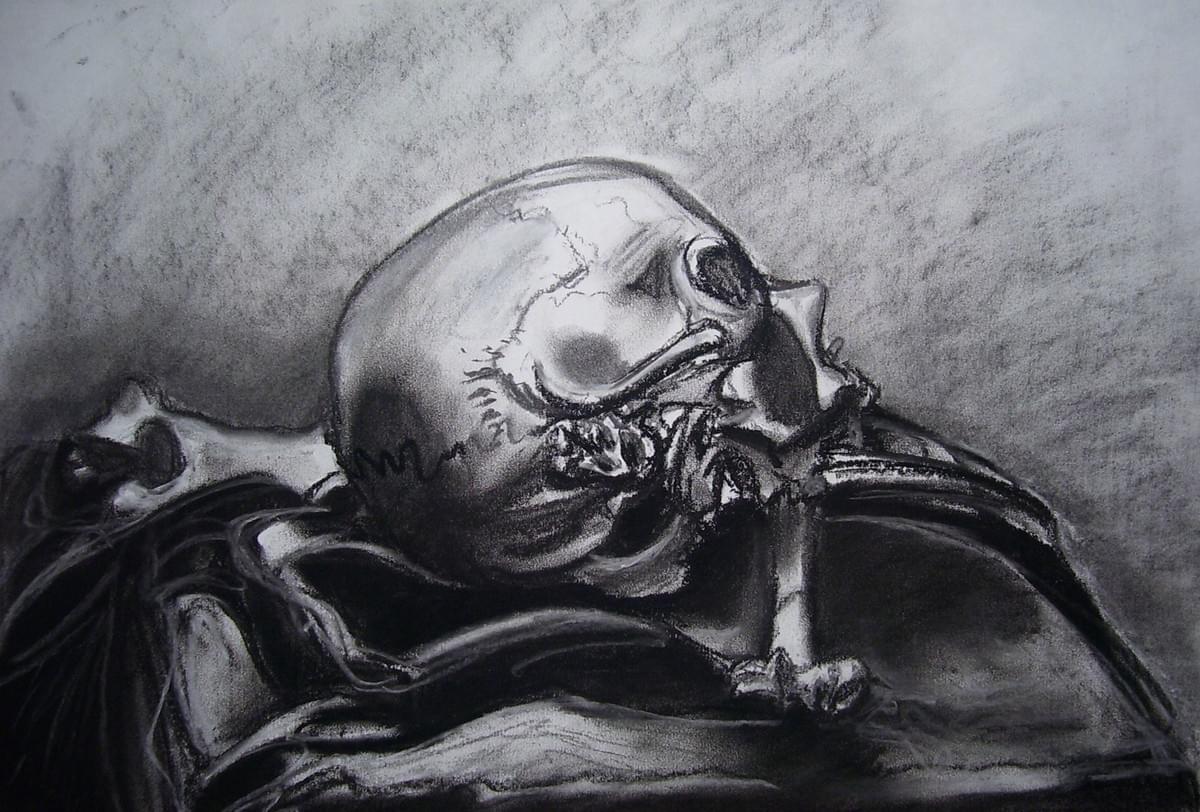
Skeleton Study was done in charcoal and white chalk on grey paper.
I’m not the first artist to have done this. The human skull has been a visual symbol for ages, spanning continents and cultures. Seen in both art and literature, it symbolizes death, mortality, and the ephemerality of hedonistic desires.
In the Western world, we think of Hamlet holding Yorick’s skull contemplating the meaning of mortality.
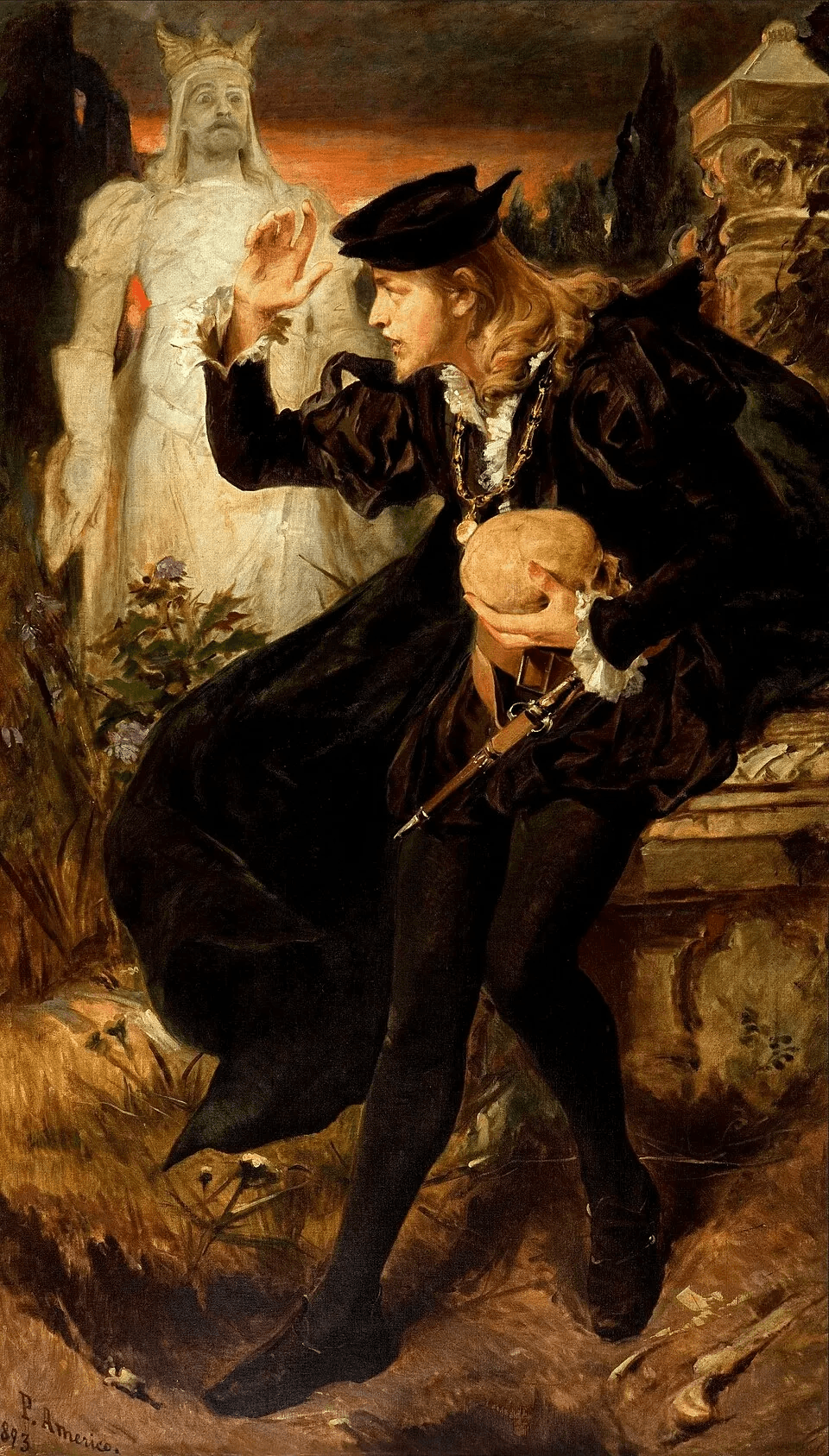
Visão de Hamlet by Pedro Américo
We think of Paul Cezanne’s still lives where he often painted them in groups.
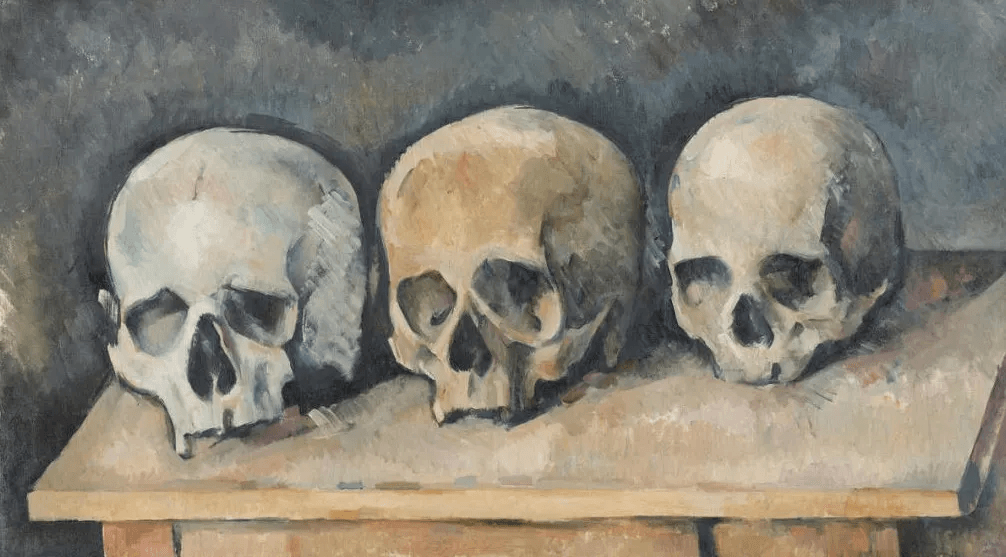
The Three Skulls by Paul Cezanne
We think of vanitas still life paintings rendered by Dutch Baroque painters.
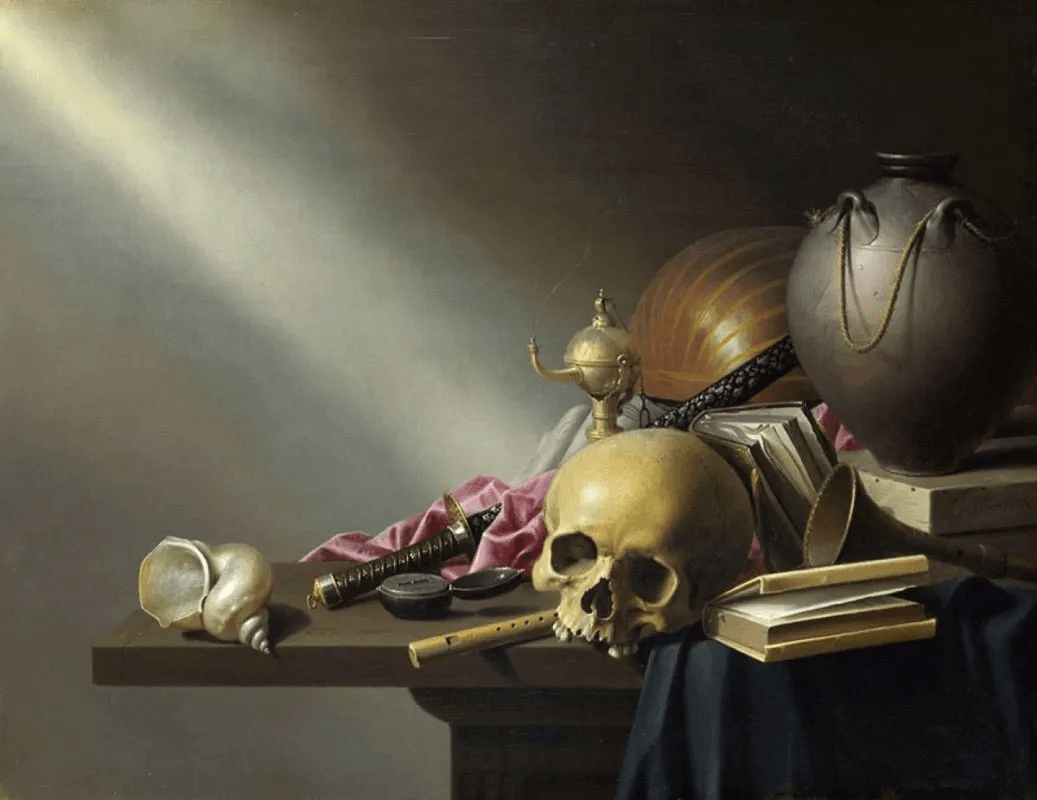
Still life: An Allegory of the Vanities of Human Life by Harmen Steenwjick
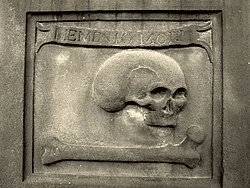
We think of memento mori and how ubiquitous that phrase has become across Western consciousness.
We think of Basquiat’s own renditions in splattered paint and bright, discordant colors.
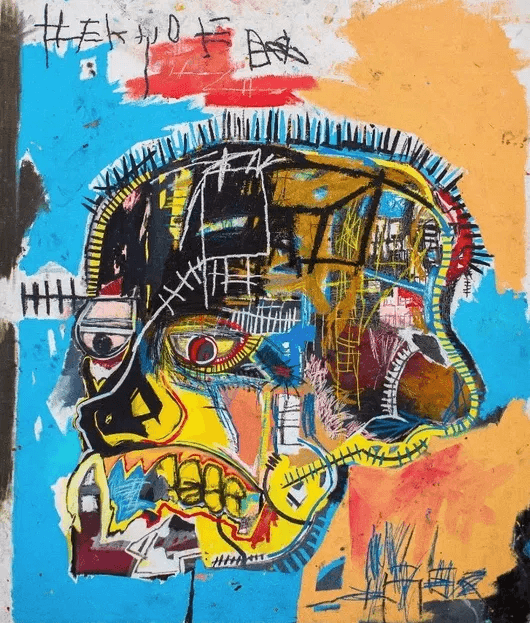
Skull (Crâne) by Jean-Michel Basquiat
We also think of Día de los Muertos celebrated in Mexico, where skulls are decorated with bright flowers.
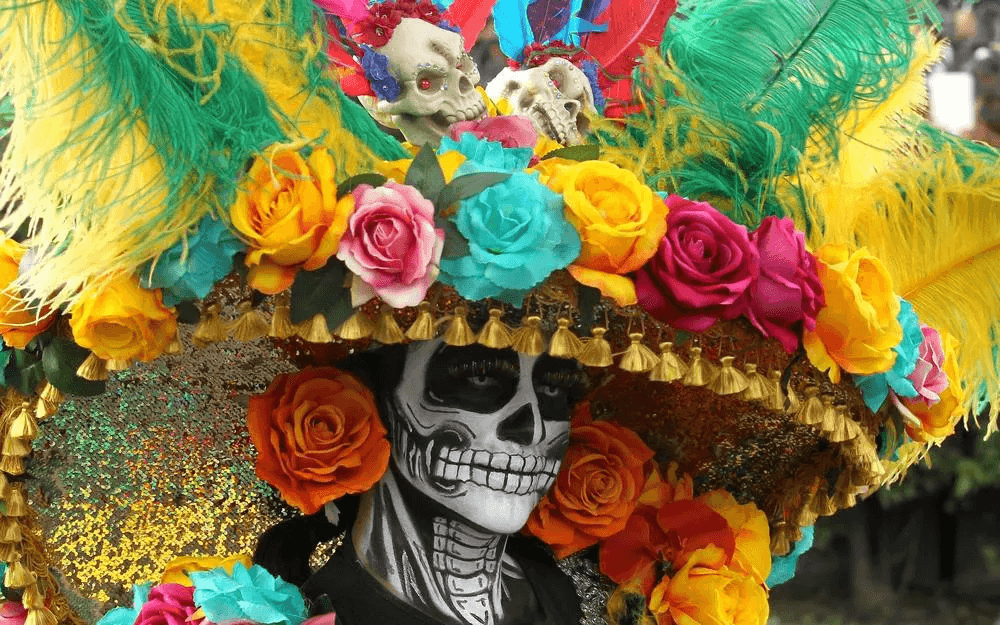
Holiday participant in Mexico. Photo by Agence France-Presse.
Relatedly, we think of La Catrina in her ostentatious hats. Both Frida Kahlo and Diego Riviera were inspired by her, integrating her and other indigenous Mexican folk images into their paintings.
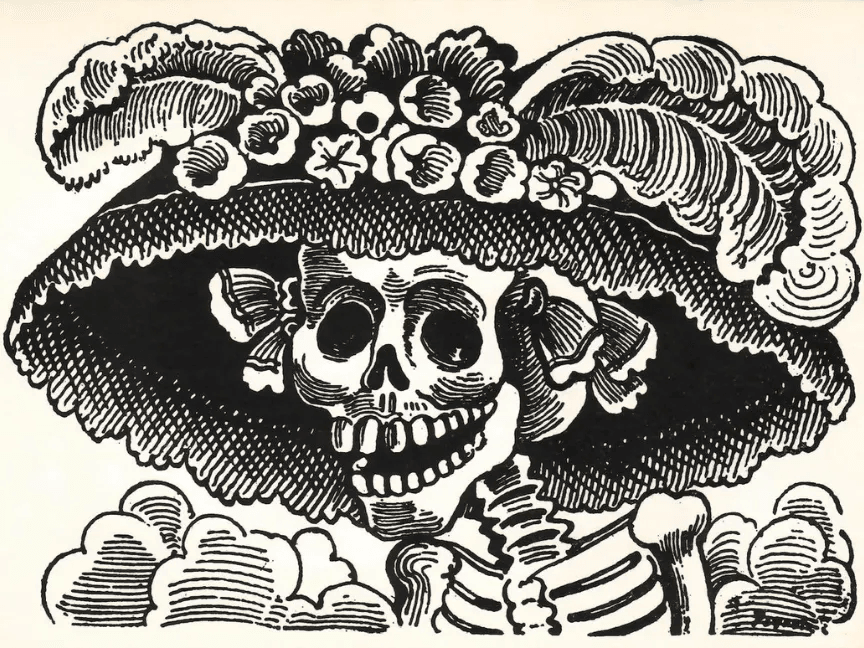
La Calavera Garbancera by José Guadalupe Posada
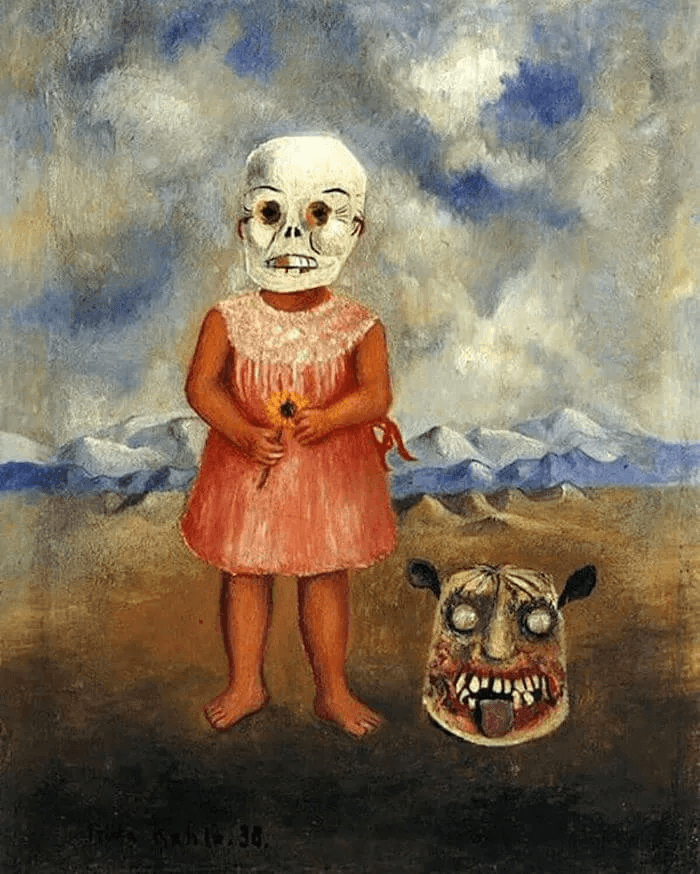
Girl with Death Mask by Frida Kahlo
Skulls show up as symbols in the religious iconography of the celebration as well. Consider the goddess Santa Muerte, a result of religious syncretism between Catholicism and ancient Mesoamerican beliefs. Now, she is depicted much like the grim reaper: a skeleton with a scythe.
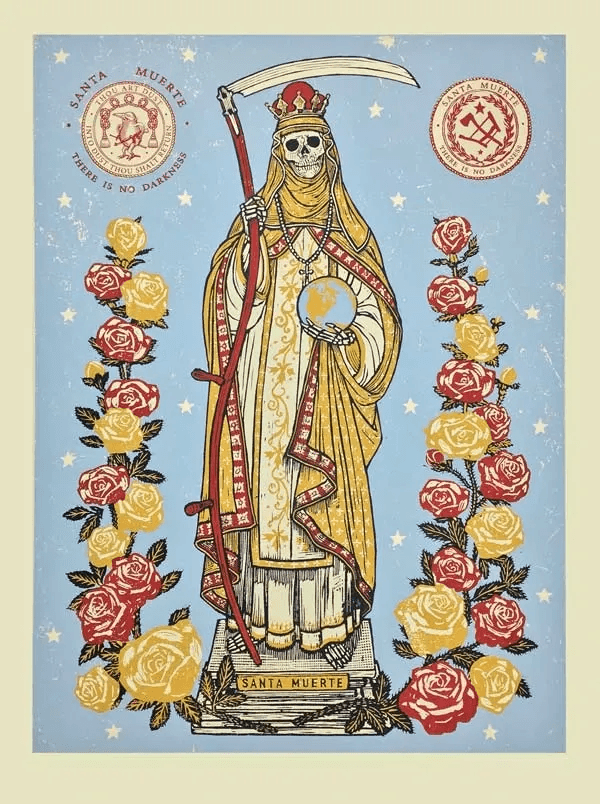
Santa Muerte by Ravi Zupa
However, before she was Santa Muerte, she was Mictēcacihuātli: the Aztec lady of the dead. Mictēcacihuātli was believed to be the overseer of the bones of the deceased and was often depicted with a flayed set of jaws swallowing the stars.
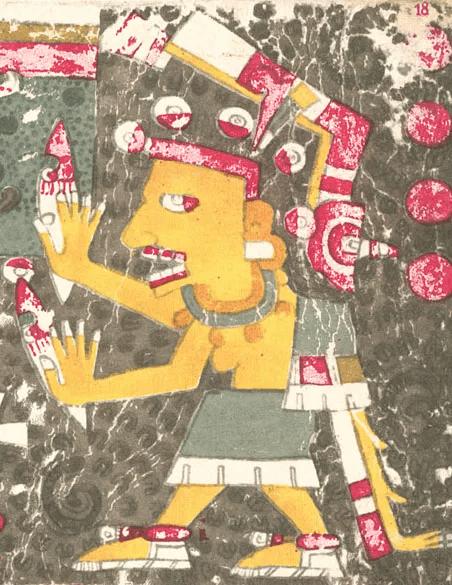
From the Codex Borgia
Similarly, in Hinduism the god Shiva is often depicted wearing a garland of skulls. This version of him is sometimes called Kapali, the one who holds the skull. As this avatar, he represented the ephemerality of life, the acceptance of mortality, and ego death.
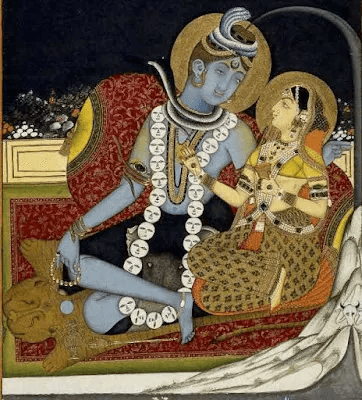
In Tantric and Tibetan Buddhism, this version of Lord Shiva is called Bhairava. He represents total destruction and wisdom. Instead of a garland of human skulls, he wears a ritual apron made out of human bones. In Vajrayāna buddhism, kapala is the name for the skull cups used for ritual offerings. Cakes and other things are often placed inside to appease his wrath.
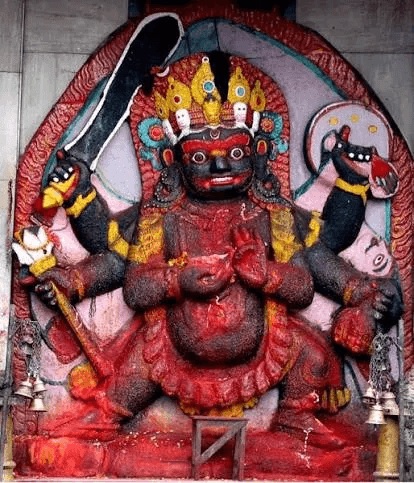
Bhairava with a kapala in his left hand.
As you can see, skulls and skeletons have been used around the world in both secular and religious imagery and literature. In my own work, I’ve depicted the skull in a few different ways.
I still, to this day, don’t know if the skull Ms. Green used as part of her still life displays was real or not. Regardless, I fell in love with the gothic symbol back then when I was learning how to depict it in mere charcoal and white chalk. When my style was evolving from realist to representational abstract, I experimented with contour sketches of skeletons on abstract backgrounds.
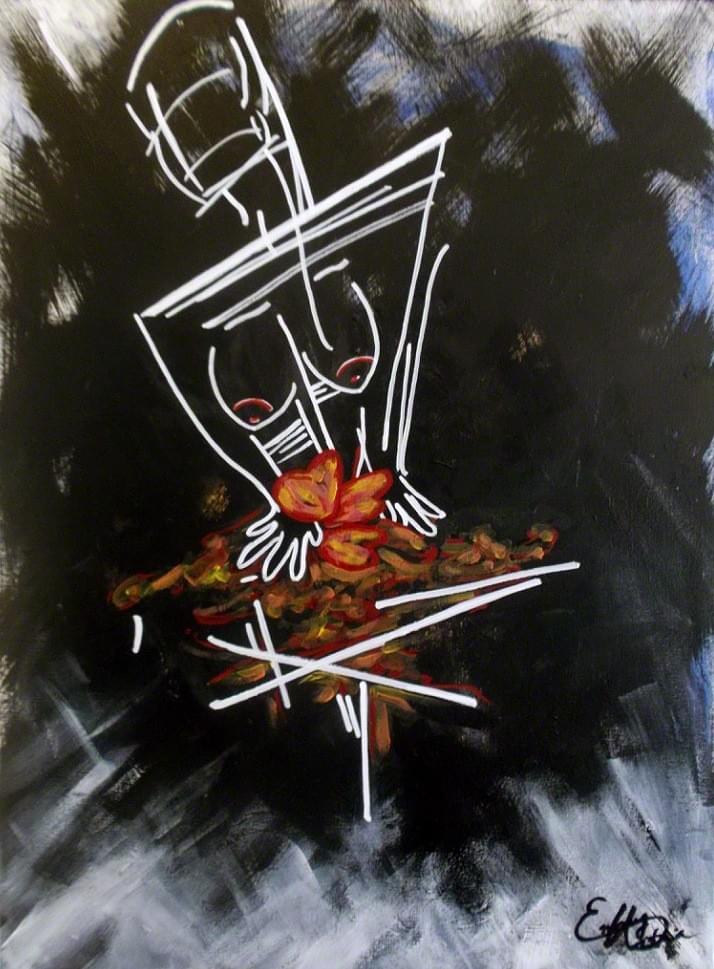
Repression was done in acrylic marker and acrylic paint on canvas
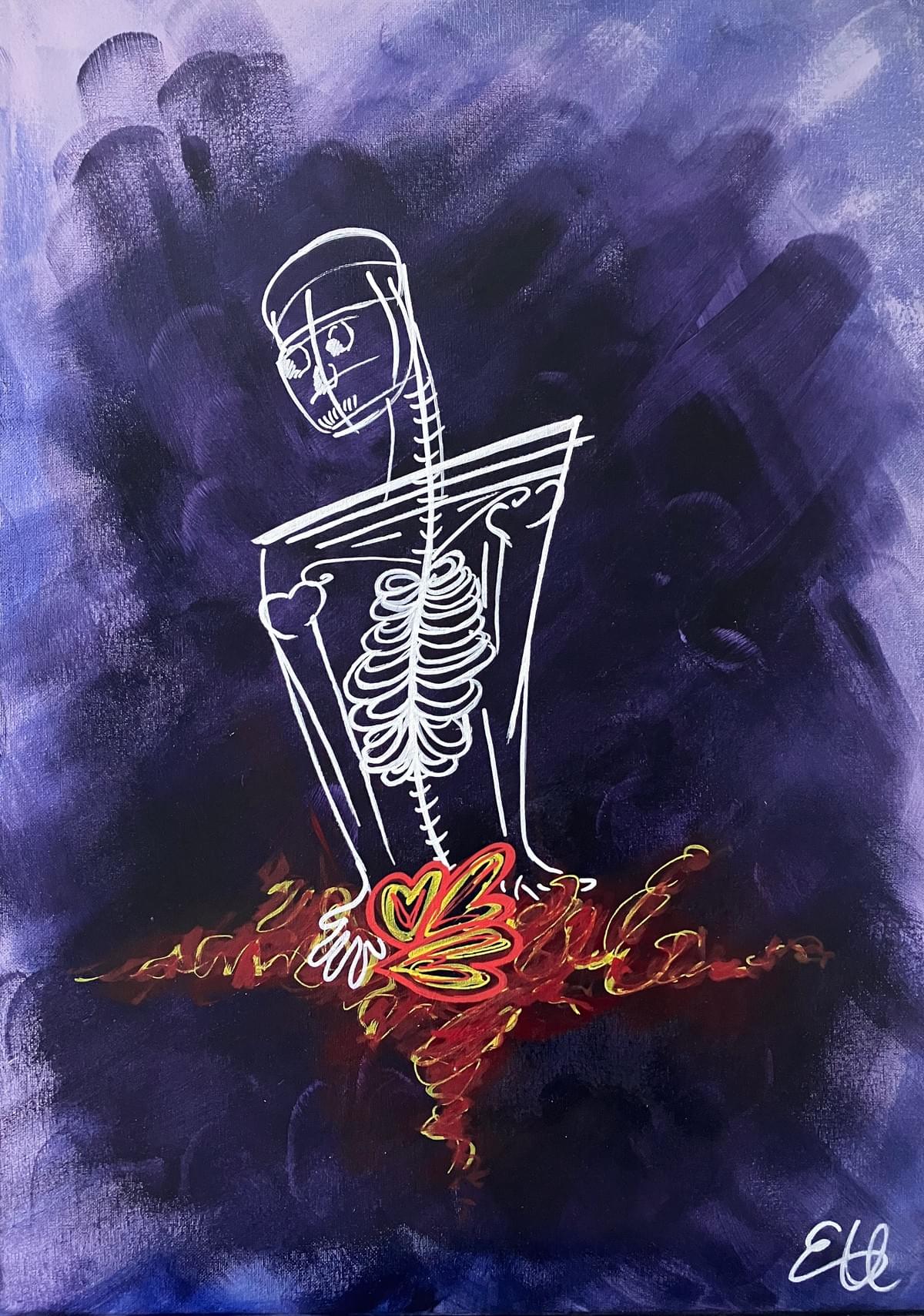
Years later, I was commissioned to do a similar painting. Untitled was also done with acrylic marker and acrylic paint on canvas.
When I was writing my second poetry book, The Other Crown, I knew I wanted to have a skull on the cover. A crown would obviously be expected, but I knew I wanted more than that. I wanted to draw a crown on top of a skull with lush plants in the background. The three representing life, death, and empowerment.
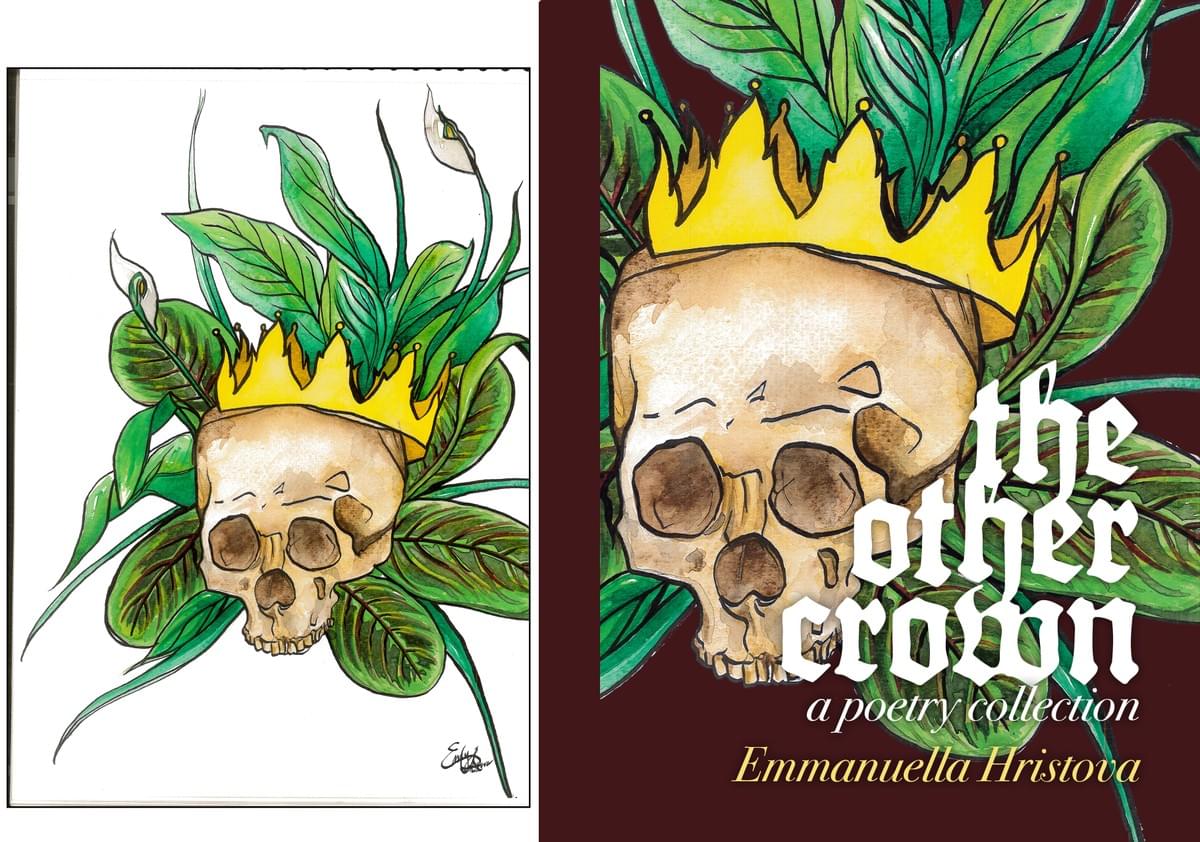
To the left is the watercolor painting The Other Crown done specifically for my poetry book of the same name. It was painted in watercolor and India ink on watercolor paper. The final book cover is on the right.
Although The Other Crown seems like a poetry book about love and heartbreak with a feminist slant, poems referencing my sister’s and father’s deaths are always sprinkled throughout any work that I do. Having lost both of them at a young age, grief will always be a theme that I write about, both in poetry and prose. Furthermore, what is heartbreak but another type of death? Not only does the skull represent death and grief, but it also represents the death of romantic relationships, featured heavily in the book.
The different chapters of the book include illustrations of a skull wearing a crown. The first chapter shows the crown covering the skull’s mouth. This is to represent speak no evil. I put this in the beginning of the book to represent the silencing of women’s voices. The following illustration has the crown covering the skulls eyes: see no evil. The final chapter features a skull with the crown covering the skulls ears—hear no evil—but you can also see the skull’s face completely. The crown is also finally on the skull’s head. This was on purpose. As women, the more we learn about the systems built to oppress us, the more we learn to distrust them and in turn, trust ourselves. Knowledge is empowerment.
The sketch on the right was also included in one of the chapters. I drew it when I was grieving the death of my sister, who was survived by my two year-old nephew at the time.
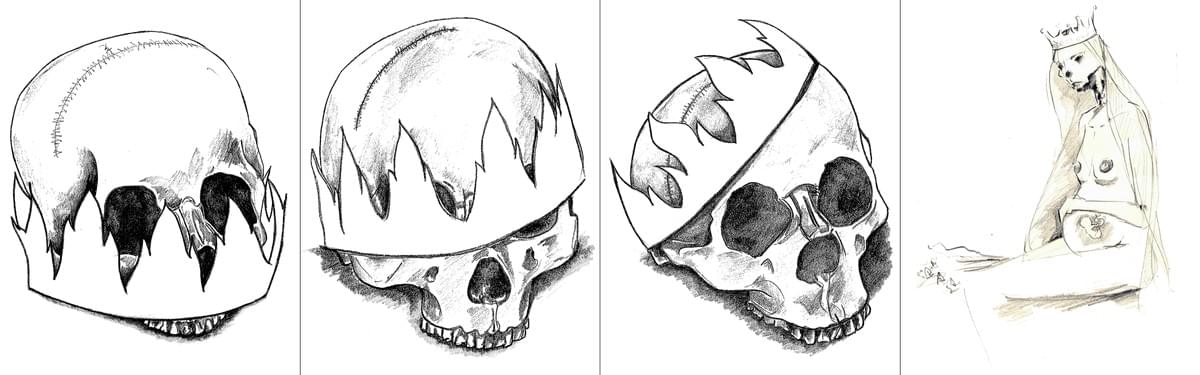
The illustrations for The Other Crown were done in graphite pencils in various Moleskin notebooks and sketchbooks.
The summer before I published The Other Crown I set up a painting studio in my apartment. My ex-boyfriend, the one whose love story in the book had “worked out”, had just moved out. I had more space physically. But emotionally I had more grief as well. This breakup wasn’t as hard as my others. I was thinking with my head this time, and not my heart. Not my attachment. I knew it was time to part ways. I still needed art as therapy, however, as meditation.
I put a plastic skull replica on the wooden kitchen counter in front of me and I spent a whole week painting it. First, it floated in the center of my canvas with no background. But once I had the bulk of the skull painted, using realistic, neutral colors, I knew what was missing. For although skulls represent death, I wanted and needed to bring life into the painting. I added bright jewel tone shades of turquoise, ochre, and plum, blended with raw sienna.
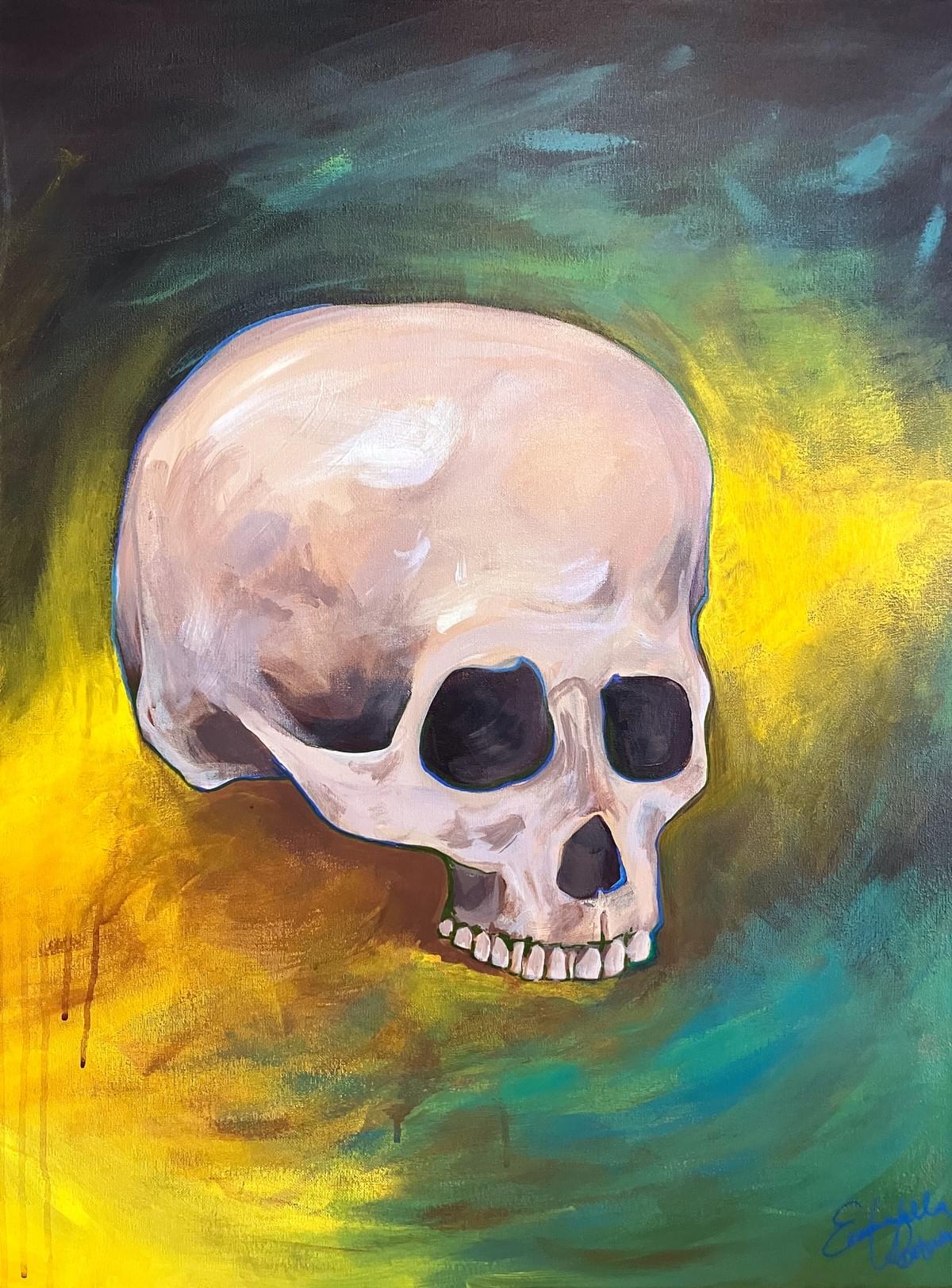
Once again, I juxtaposed the skull against something vibrant. Something lively. Life and death, recurring motifs in both my artwork and writing.
I don’t know what my next skull painting will be. Maybe I will try a representational abstract style that incorporates splatter paint and acrylic marker, like the one I’m currently working on of an apple (Original Sin). Maybe I’ll try another angle of the skull in front of another colorful background.
What I do know, however, is that I will spend the rest of my life contemplating and writing about death.
Because we only have one guarantee in this life: that we will die. So I will continue to paint death, in all its different forms.
