

The bell of the Lower Hamlet, where my best friend and I stayed while at Plum Village Monastery for the week.
This summer, I spent one week at the Buddhist monastery renowned zen master and peace activist, Thich Nhat Hanh, started in Loubès-Bernac, France. My purpose of the week was to learn about Buddhism and meditation, which was my first in-depth experience with a religion outside of Christianity, and with any religion at all since I left. Read more about that here.
I love learning, so I was prepared to glean all that I could from the week. I was particularly interested in the Buddhist code of ethics, since I had been undergoing a process of writing my own ethical code and spiritual practice outside of any religious institutions for the past year.
Learning about Thich Nhat Hanh’s teachings, and how they influenced the peace movement in the 1970’s was very inspiring. But the real takeaway of the retreat was how practical meditation could be. And how cognitively beneficial, no matter your spiritual practice.
We had classes on sitting meditation, we had group sharing sessions with our Sangha families where we practiced deep listening, we had dedicated silent hours, and we practiced walking meditation—among many other things.
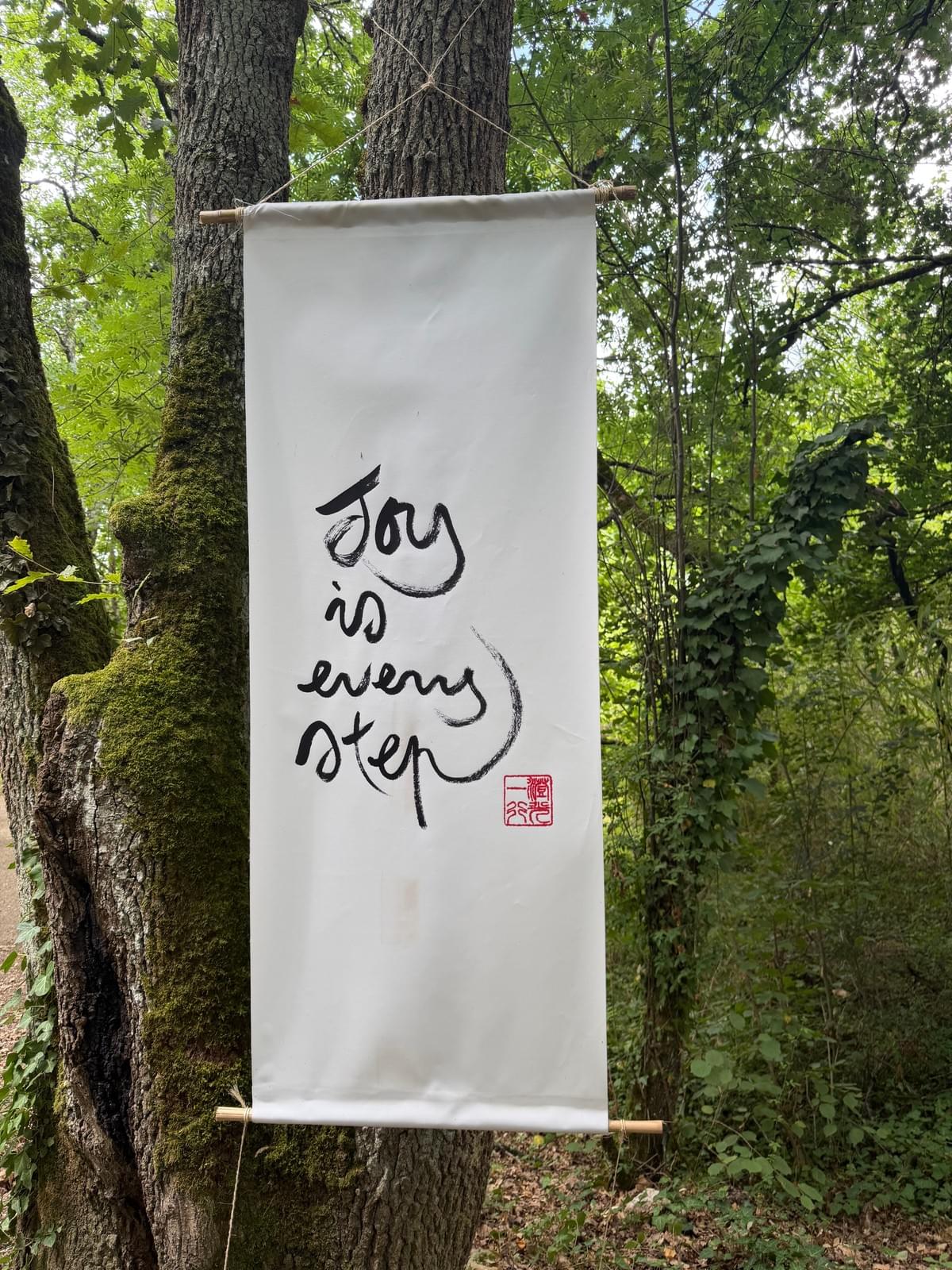
A banner you can see while practicing walking meditation along the monastery’s many peaceful paths.
There were certain things that I noticed that didn’t surprise me.
For example, I often mentally compared their Buddhist practice with my own Evangelical upbringing and noted the differences. Buddhism is very body positive, for example; while Evangelical Christianity often ignores that you have a body in the first place (among many other such comparisons).
There were other things, however, that I noticed that did surprise me. Because I wasn’t expecting them.
On one hot afternoon (we were in the middle of a record-breaking heatwave after all), I was dozing off into a sweet sleep when a very random memory popped into my mind.
It was from last year. Or maybe it was from the year before. It didn’t matter, because this incident had occurred more than once before. I knew it. I knew it because I had heard my mom say this multiple times about myself.
I’m fat, I need to lose weight.
My mother. 79 years old. Last year she had a triple bypass on her heart. And yet, even in the midst of all of that.
Worried that she was… fat.
It’s not like my mother had ever been fat in her life. She had always been thin. Was borderline emaciated as a child. My great-grandma would make her drink raw eggs to increase her appetite. An old wives’ tale, apparently.
Even in her sixties, I remember a friend telling me my mom was such a fox. We had been lounging on the platform of an indoor hotel pool, chlorine wafting all around us. “My body’s never looked that good,” she lamented to me. I glanced at my mom in her black tankini. Her frizzy black curls bouncing. She looked so carefree. I thought she was.
But obviously, she never was.
So something clicked for me, as I sweat in bed that torrid afternoon.
And it was something I was able to share with my Sangha family a few hours later, as we sat underneath the shade of a willow tree.
What things have come up for you that are perhaps unexpected?
I wasn’t planning on sharing anything unexpected, in fact, I already had a tailor-made response that I had been mulling over in my mind the past day for what I was actually going to share during our group session. But the word unexpectedcaught me off guard. So I did indeed, share the unexpected. Not something that came up for me during meditation, but when I was doing anything but.
It’s not like I hadn’t clocked that my mom had said these things about herself in the past. Of course I did. I grew up hearing them. She had said that about herself, over and over again. She was dieting and juicing well into her seventies. Well into her old age.
Well into her old age.
That’s the part that I hadn’t considered before. Maybe because I wasn’t really paying attention. But now that I was, it was heartbreaking to me.
What use is worrying about body weight when cholesterol might stop your heart from beating? Even with all the complications of old age, my mom was still most concerned with the size of her body.
When it dawned on me how utterly absurd that was, I realized why I hadn’t been able to shake my own body dysmorphia even to this day. Despite the raging feminism. I still, when I looked in the mirror, wanted to be smaller.
My body dysmorphia was generational.
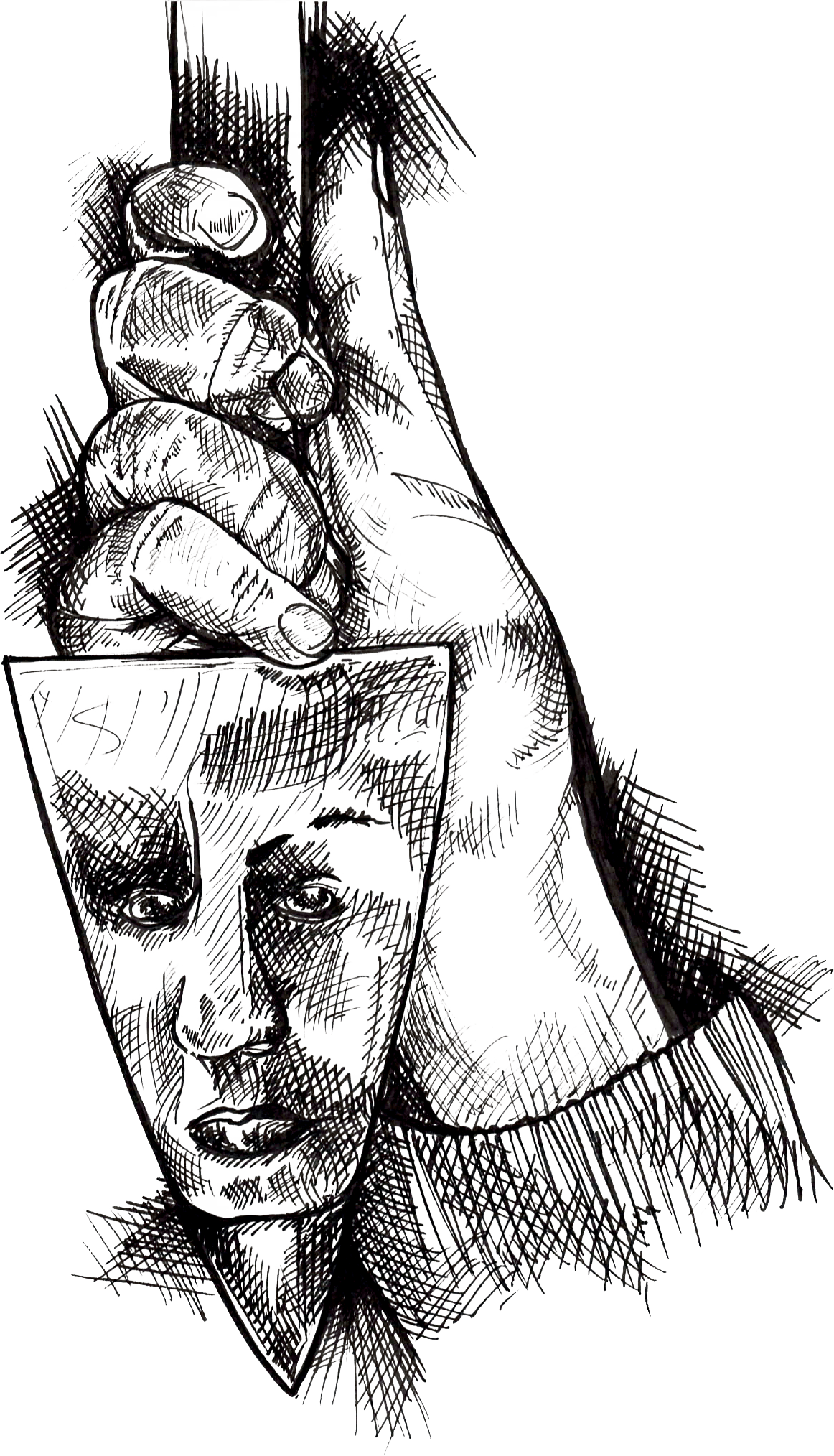
An illustration from “Constraint of Beauty”, the fourth chapter of Love Propaganda. Done in pen, this drawing symbolizes how beauty standards cause mental violence to how we view ourselves in the mirror.
I learned it from my mom. Who probably learned it from her mom. Or if she didn’t, from culture. A culture that wants to keep women small and vulnerable so that men could physically overpower them. Or, at the very least, keep them tired, sick, and distracted.
I write about this in my latest poetry book Love Propaganda, where I have a whole chapter dedicated to how beauty standards hold women back from achieving their true potential. From accessing their power.
I know firsthand, how these standards have held me back. Vexed me. Wasted hours, if not days, of my time which could have been better spent on education, career advancement, artistic creation, or just some goddess-damned leisure time.
What I want to see
when I look in the mirror is
something smaller.
There is no logic behind this
feeling; my brain responds to
millions of messages that tell me
I’m supposed to shrink to
be beautiful.
To be
feminine.
But who benefits from smaller
prey but the predator that
sets itself upon it?
How convenient it is for
men in power to
distract her with
arbitrary vain obsession.
Convincing herself to weaken,
to atrophy to skin and bones,
to bonsai her body.
Unable to protect herself from
the wolf lying dormant in her
bed.
They have made weakness beauty
and we have accepted, guzzling
down the poison of our own murder.
But what is the antidote?
How do I refuse the shame that
swells up within me when I
gaze upon my own reflection?
Perhaps, it is simply that—refusal.
Refusal to conform to standards
that leave me physically weak
in the face of danger.
Changing desires instead,
wanting my body to live free,
free in its weight and
strength and
wholeness.
Wanting to see, instead,
my body take up space
and revel in it.
I have also seen internet stories from the daughters’ perspectives, where they have thanked their mothers for refraining from self-critique. They noted how positively this affected them growing up.
What I try to do now, although it’s not easy, is to banish negative thoughts about my body.
I am not perfect. I have as many negative thoughts as I do positive thoughts. And when a negative thought comes along, I try to push it aside, think of something else, distract myself. I try to think of something positive about my body to counterbalance it. I am trying not to feed the negative thoughts.
I’m not necessarily saying that it’s working.
But what I am saying is that I’m refusing to accept these thoughts as truth.
If my body dysmorphia is generational, then I will make it my mission to make sure it ends with me.
It must end with me.
P.S. Love Propaganda 🫀 is out! Love Propaganda is an illustrated poetry book analyzing the constraints that women experience. Love, heartbreak, past memories, beauty standards, and institutions all hold women back, unless they break through and reclaim their power.

*I personally recommend www.lulu.com for prints.
